
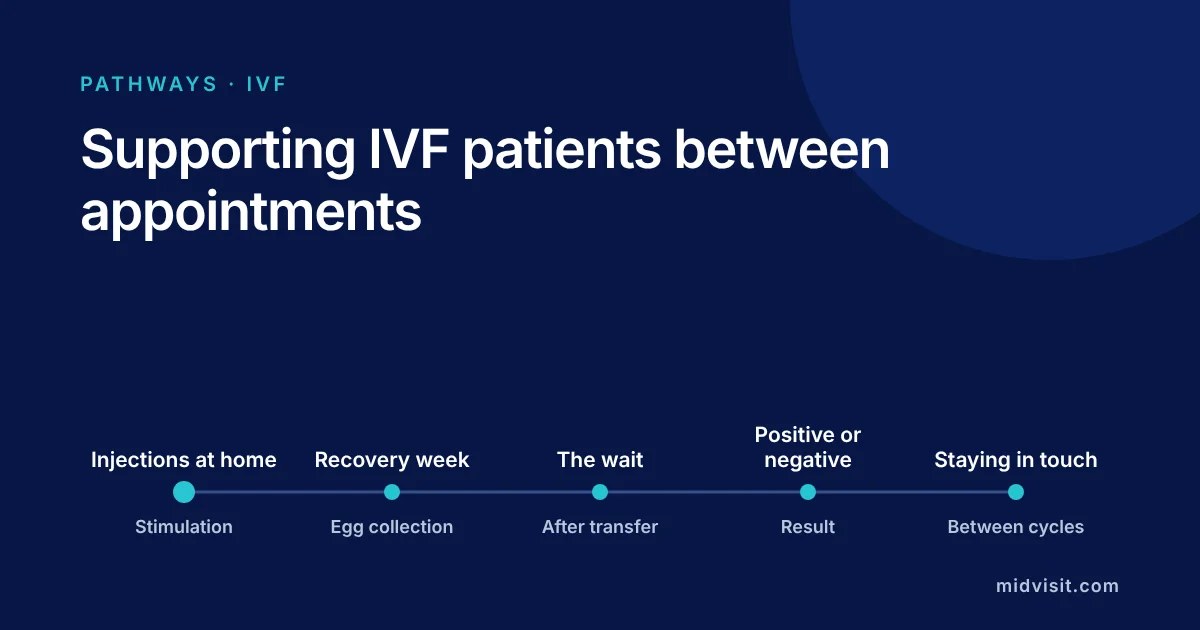
IVF patient support between appointments is the planned contact a fertility clinic keeps with patients during injections, after egg collection, during the wait after transfer and after a result. The HFEA expects every licensed clinic to have a patient support policy, and psychological burden is one of the most common reasons patients stop treatment.
Much of IVF happens away from the clinic. Patients inject at home, recover from egg collection at home and wait for results at home. The appointments are well organised; the days between them often are not. This guide is for UK fertility clinics planning support for those gaps, and it sits within our care programmes for patients between appointments.
It covers what the HFEA and NICE expect, where the gaps fall in a cycle, the questions your clinical team should answer, and which tasks a structured call can and cannot take on.
What does IVF patient support between appointments mean?
It means planned contact with patients in the days and weeks between clinic visits, not only when they phone in. The aim is to hear how they are coping, catch practical or physical problems and make sure they know who to contact.
Support has three layers. Information tells patients what to expect. Routine support is the everyday contact all staff give. Counselling is a specialist service from a qualified counsellor. Contact between appointments mostly sits in the first two layers and should make the third easy to reach.
Why does support between IVF appointments matter?
Because the burden of treatment falls largely outside the clinic, and it affects whether patients continue. The evidence points in the same direction from several angles.
- Stopping treatment. A systematic review of why patients discontinue fertility treatment found that psychological burden was among the reasons given across stages of care. The authors called for better care organisation and support.
- Patient experience. In the HFEA's National Patient Survey 2024, 73% of patients were satisfied with their latest treatment overall. Satisfaction was lowest for the level of support given, including access to counselling, at 69%.
- Physical risks at home. Some complications, such as ovarian hyperstimulation syndrome (OHSS), tend to appear after the patient has left the clinic. The NHS says OHSS generally develops in the week after egg collection.
In our view, the survey gap is the practical point for a private clinic. Patients rate treatment well but support less well, and support is the part most often left to chance between appointments.
What do the HFEA and NICE expect from fertility clinics?
UK licensed clinics already work to clear expectations on counselling and support. A between-appointments plan should help you meet them, not run alongside them.
- Counselling and patient support. Guidance Note 3 of the HFEA Code of Practice covers counselling and patient support. It asks clinics to offer counselling, to record that it was offered even if declined, and to have a patient support policy (paragraph 3.14).
- Support from all staff. The Code says that support should come from all staff and is not limited to counselling. The policy should set out each staff member's responsibilities.
- Qualified counsellors. Counselling itself should be provided only by qualified counsellors.
- Before, during and after. NICE guideline NG257 on fertility problems recommends offering counselling before, during and after investigation and treatment, irrespective of the outcome, by someone not directly involved in the patient's management.
- Routine care by staff. The ESHRE guideline on routine psychosocial care is written for all fertility staff and recommends referring patients at risk of severe psychosocial problems to counselling or psychotherapy. ESHRE is updating it.
The HFEA also publishes a good-practice patient support pathway for clinics, which covers emotional support from the start to the end of a patient's experience. It is a useful starting point when mapping your own contact plan.
Where are the gaps between IVF appointments?
The gaps follow the cycle. Each stage puts different demands on the patient, so each needs its own decision about contact. The table frames those decisions as questions, because the answers depend on your protocols and patients.
| Stage | What the patient may be dealing with | Question for your clinical team |
|---|---|---|
| Stimulation at home | Daily injections, timing, side effects, missed doses | Should someone check in early in stimulation, and what should prompt a nurse call-back? |
| After egg collection | Recovery, pain, possible OHSS symptoms | Should every patient hear from the clinic in the following week, or only those at higher risk? |
| Wait after transfer | Uncertainty, anxiety, medicines, questions about symptoms | What contact, if any, helps in this period, and who should make it? |
| After a negative result | Grief, decisions about next steps | Who contacts the patient, when, and how is counselling offered again? |
| After a positive result | Anxiety before the first scan, medicines | What contact is planned before the scan and what should patients report? |
| Between cycles | Time off treatment, cost, deciding whether to continue | How does the clinic stay in touch without pressure, and who owns that contact? |
Physical symptoms after egg collection
NHS and HFEA guidance list OHSS symptoms including tummy pain and swelling, feeling sick or being sick, and shortness of breath. Both tell patients to contact their clinic promptly; the HFEA says to contact the clinic immediately. Any planned contact should repeat that advice. It should never leave a patient waiting for the next scheduled call.
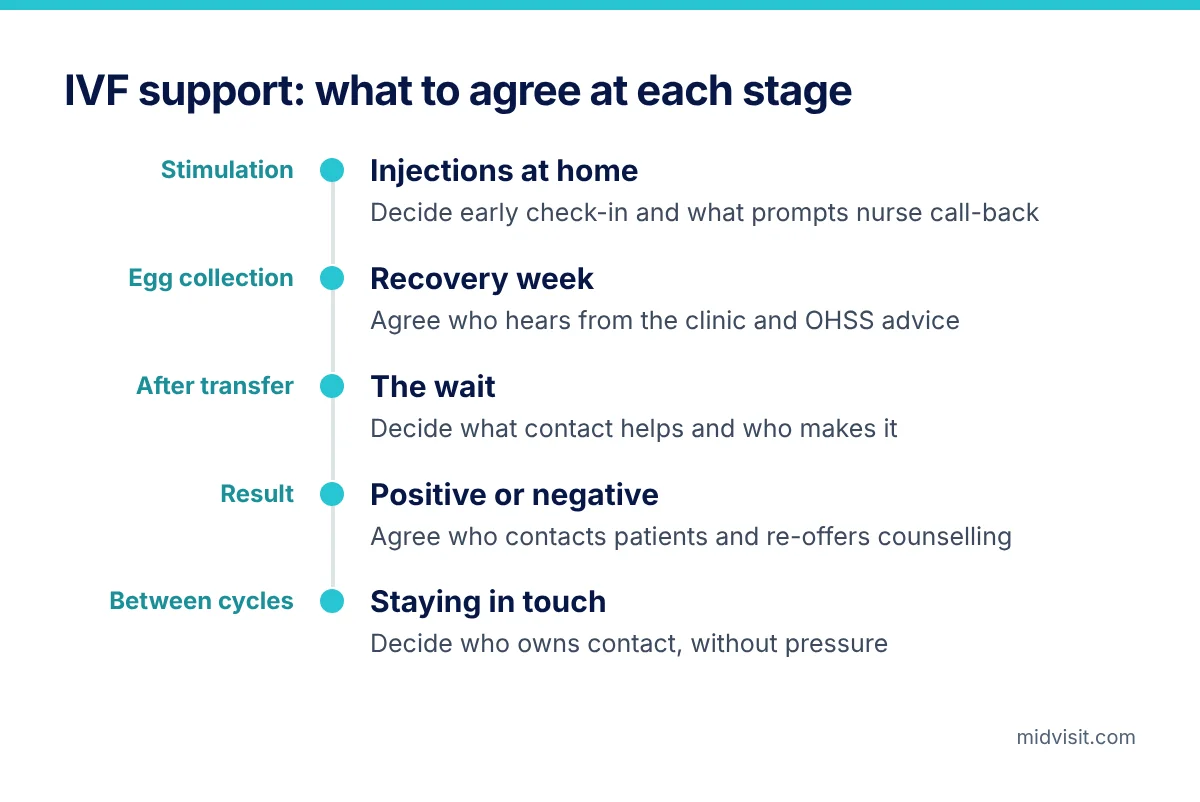
Questions to plan IVF patient support with your clinical team
There is no national contact schedule for the days between IVF appointments. Instead of a fixed plan, take these questions to your consultants, nurses and counsellor, and agree the answers for your clinic.
The answers will differ between a first cycle and a frozen transfer, and between patients. Revisit them once you have seen a few months of contact.
Which IVF support tasks suit a structured call, and which need a person?
Structured calls can collect routine information consistently. They cannot replace the judgement, warmth or specialist skills that much of IVF support needs. The table below is our view of where the line falls; your clinical team should set its own.
| Task | Structured call? | Why |
|---|---|---|
| Checking practical questions about medicines or injections | Can help | Set questions, answers routed to a nurse |
| Collecting reported symptoms after egg collection | Can help, alongside direct advice to call the clinic | Consistent questions; flags reach a clinician after the call |
| Reminding patients that counselling is available | Can help | A routine prompt, with booking handled by staff |
| Giving test results | No | Results need a person who can respond to the patient |
| Responding to distress or grief | No | Needs a trained person, and counselling needs a qualified counsellor |
| Discussing whether to continue treatment | No | A clinical and personal conversation for the team |
If you are deciding between calls and text messages for routine contact, our comparison of AI voice calls and SMS reminders covers the trade-offs.
How to set up IVF patient support between appointments
We recommend starting small, with one stage of the cycle and a named owner, then extending once the team trusts the process. This is operational advice, not clinical guidance.
- Pick one gap. Choose the stage where patients most often phone in with questions, or where your team worries most.
- Map it to your policy. Check the contact fits your HFEA patient support policy and counselling arrangements.
- Agree the questions and flags. Your clinical team writes the questions and decides what prompts review.
- Agree consent and timing. Explain at consent who will contact the patient, how and when, and let them opt out.
- Name the reviewers. Decide who reviews flags, how fast, and who covers leave.
- Keep a route in. Make sure patients can always reach the clinic themselves. Our guide to patient-initiated follow-up covers how to run that well.
- Look back early. Review answer rates, flags and patient feedback after the first month. Our guide to running a 90-day remote monitoring pilot sets out review points.
How Midvisit helps
Midvisit is an AI patient follow-up platform for private clinics. Its voice agent, Mira, calls patients between appointments and flags concerns for clinician review after each call. Midvisit does not offer a ready-made IVF pathway. Clinics configure follow-up pathways with us and approve the questions, call timing and alert criteria themselves; IVF support would be set up that way, as a configured pathway rather than a live product.
The clinic enrols each patient, agreeing suitability, consent, call timing and review ownership. Mira phones the patient in English and asks the structured questions in that pathway. Each call produces an outcome, transcript and AI-generated summary, and responses that meet the clinic's alert criteria are routed to assigned clinicians after the call. Mira does not counsel patients, give results, make clinical decisions or act as an emergency service; see our clinical oversight approach and how Midvisit works.
FAQs
What is IVF patient support?
IVF patient support is the information, routine contact and counselling a fertility clinic gives patients through treatment. Between appointments it means planned contact during injections, after egg collection, in the wait after transfer and after a result. The HFEA expects licensed clinics to have a patient support policy that involves all staff, not only counsellors.
Do UK fertility clinics have to offer counselling?
Yes. The HFEA Code of Practice requires licensed clinics to offer counselling and to record that it was offered, even if the patient declines. Counselling should be provided by a qualified counsellor. NICE also recommends offering counselling before, during and after investigation and treatment, whatever the outcome, from someone not directly involved in the patient's care.
What is an HFEA patient support policy?
It is a written policy every licensed clinic must have, set out in Guidance Note 3 of the HFEA Code of Practice. It describes how the clinic makes sure patients, partners and donors get appropriate psychosocial support from all staff, and what each staff member is responsible for. The HFEA publishes example policies and a good-practice patient support pathway.
Why do patients stop IVF treatment?
A systematic review of discontinuation in fertility treatment found psychological burden among the reasons patients gave across stages of care, alongside other factors. It also found that no single predictor was consistently linked to stopping. The review's authors called for better organisation of care and support, which is one reason clinics plan contact between appointments rather than waiting for patients to call.
How often should a fertility clinic contact patients between appointments?
No national schedule exists for contact between IVF appointments. How often to call, at which stages and for which patients are decisions for your clinical team, guided by your HFEA patient support policy. Start with the stage where patients most often call in with questions, then review answer rates, flags and feedback before extending.
Can AI calls be used to support IVF patients?
Structured AI calls can help with routine tasks, such as checking practical questions about medicines or collecting reported symptoms for a nurse to review. They should not give results, respond to distress or replace counselling. The clinic decides which patients are suitable, what is asked, which answers prompt review and who reviews them.
What should IVF patients do if they have symptoms after egg collection?
NHS and HFEA guidance tell patients to contact their clinic promptly if they have symptoms such as tummy pain and swelling, feeling sick, or shortness of breath after egg collection. Planned contact from the clinic should repeat that advice, and should never be a reason for a patient to wait for the next call.